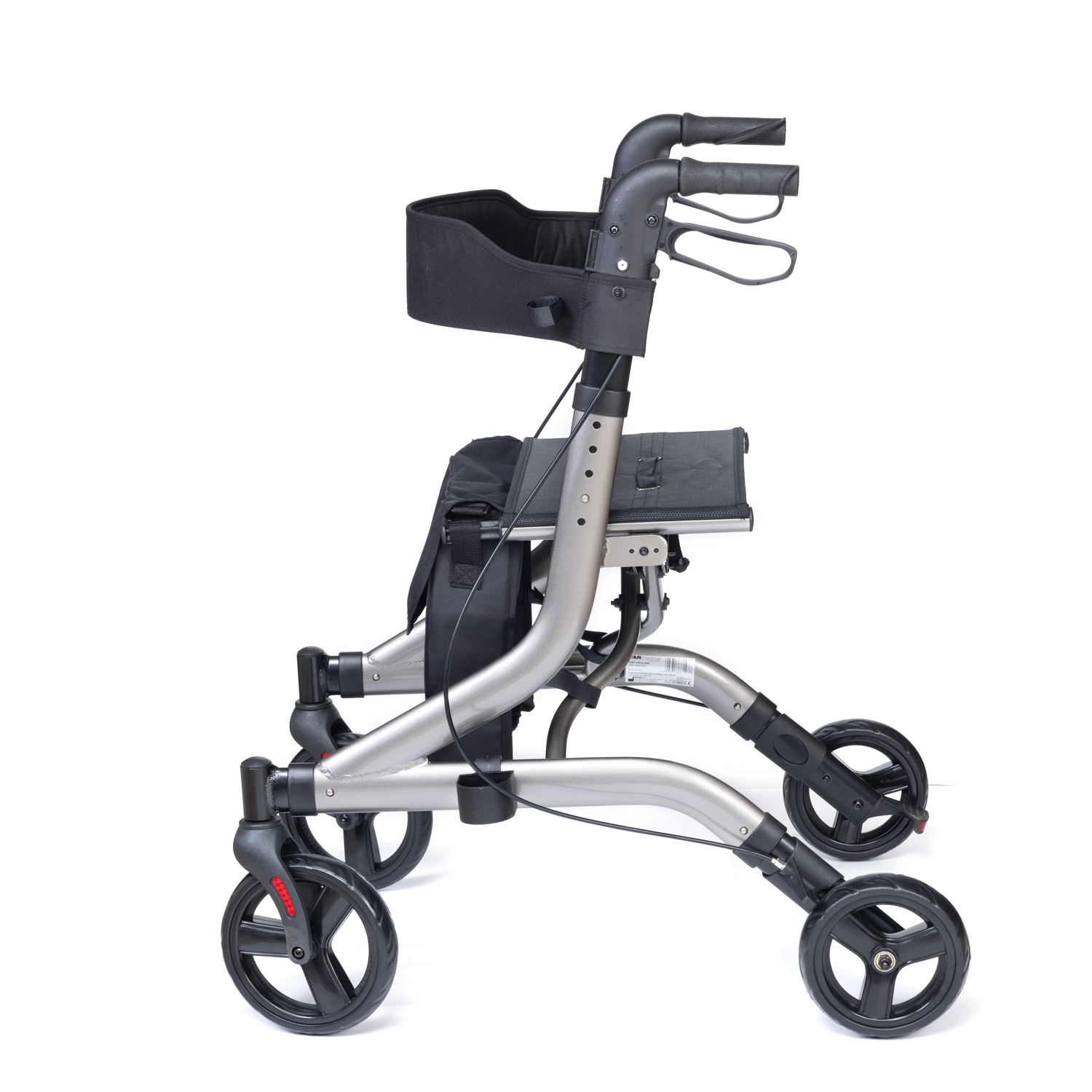
Watching an elderly parent lose their walking confidence is an emotionally challenging experience. Caregivers often struggle to find solutions bridging the gap between maintaining safety and preserving personal independence. Transitioning to a mobility aid feels daunting for everyone involved. However, modern medical equipment solves these practical hurdles beautifully. A Foldable Rollator provides the optimal balance between enabling active movement and ensuring crucial fall prevention. It offers reliable, continuous support without forcing your loved one to lift a heavy, cumbersome frame.
This guide provides a realistic, evidence-based framework for evaluating mobility devices. We will explore how to select the right features, assess functional limitations, and successfully introduce this tool to your parent. You will learn the exact specifications to look for, from ergonomic handle heights to reliable braking systems. By the end, you will feel prepared to choose a device empowering your loved one to navigate their world safely.
Key Takeaways
Assess the Need: Foldable rollators are for individuals who need balance assistance and resting spots, not heavy weight-bearing support (which requires a standard walker).
Design Matters: "X-frame" (side-to-side) folding mechanisms offer significantly better portability and standalone storage than traditional "A-frame" models.
Wheel Size Dictates Terrain: 6-inch wheels are strictly for indoors/smooth surfaces; 8-inch or larger wheels are mandatory for outdoor, uneven terrain.
Adoption is Psychological: Successful implementation requires addressing the user's aesthetic preferences and dignity, not just medical requirements.
Defining the Use Case: Is a Foldable Rollator the Right Choice?
Caregivers must carefully differentiate between mobility aids to prevent dangerous mismatching. Choosing the wrong equipment often leads to decreased mobility or increased fall risks. You need to understand how the user will interact with the device daily.
Standard walkers require users to lift the frame forward. They then step into the space created. This start-and-stop motion interrupts a natural gait. Standard walkers provide maximum weight-bearing support for individuals recovering from severe surgeries. They remain highly stable because they lack wheels on all four legs.
Conversely, a Foldable Rollator keeps all four wheels on the ground. It promotes a fluid, continuous walking stride. However, this constant rolling motion demands specific physical capabilities. Users must possess enough cognitive awareness and hand strength to operate the hand brakes. If a parent suffers from severe cognitive decline or poor grip strength, the device might roll away from them. This creates a significant safety hazard.
The folding mechanism solves several severe logistical problems. Traditional rigid frames dominate indoor spaces but fail miserably during travel. Foldable models collapse easily. They fit perfectly into compact car trunks. They navigate narrow restaurant aisles seamlessly. They tuck neatly into tight apartment corners. This portability ensures the user actually takes the device on outings rather than leaving it behind.
Always establish a strict medical baseline before purchasing. A physical therapist or occupational therapist should evaluate the user. They will confirm the parent possesses the correct gait pattern and neurological stability for wheeled support. Professional assessments prevent well-meaning caregivers from buying inappropriate, dangerous equipment.
Core Evaluation Dimensions for Caregivers
Folding Mechanisms and Portability
The way a frame collapses dictates its daily usefulness. Side-to-side folding mechanisms, often called X-frames or cross-brace frames, fold exactly like a standard wheelchair. You simply pull a strap on the seat. The two sides pull together smoothly.
This design offers a massive logistical benefit. X-frame models stand upright independently when folded. They take up minimal space in a hallway or car trunk. Caregivers love them because they slide easily behind a passenger seat.
Front-to-back folding mechanisms, known as A-frames, dominate the budget market. These models require users to lift a rigid hinge mechanism. They feel clunky during operation. You typically must remove the storage basket completely before folding them. Worse, they lie completely flat when collapsed. This awkward shape consumes the entire floor space of a standard car trunk.
Caregivers must also balance weight against stability. Aluminum and carbon fiber frames usually weigh between 12 and 16 pounds. They allow an adult child to lift the device into an SUV single-handedly without straining their back. However, lightweight frames cannot support everyone. Heavy-duty steel frames weigh significantly more but remain absolutely necessary for bariatric weight capacities.
Feature
X-Frame (Side-to-Side)
A-Frame (Front-to-Back)
Folding Action
Smooth, one-handed pull strap
Clunky, requires two hands to hinge
Storage Stance
Stands upright independently
Must lean against a wall or lie flat
Trunk Space
Minimal footprint
Consumes maximum floor space
Basket Removal
Folds with soft pouch attached
Rigid basket must be removed
Braking Systems and Safety Compliance
Brakes serve as the primary safety mechanism on any wheeled device. Loop-lock brakes represent the current industry standard. Users pull up on the loops to slow down while walking. More importantly, they push down on the loops to engage the parking brake.
This "push-down to lock" feature is non-negotiable. Users must engage the parking brake every single time they sit on the built-in seat. If the brakes fail or remain unlocked, the seat will shoot backward as they sit, causing a catastrophic fall.
Cable management also plays a hidden but critical role in safety. Budget models feature exposed brake cables looping loosely down the frame. These loose wires easily snag on doorknobs, cabinet handles, or stray furniture. Premium models solve this problem by routing the brake cables internally through the hollow frame tubes. Internal cables create a sleek look and eliminate dangerous snagging hazards completely.
Wheel Size and Environmental Suitability
Wheel size strictly dictates where the device can safely travel. Many caregivers mistakenly buy a model based on color, ignoring the wheels entirely. This mistake limits the user's mobility severely.
Six-inch solid plastic wheels work strictly for indoor environments. They glide perfectly over linoleum floors, smooth carpets, and hospital corridors. However, using 6-inch wheels outdoors poses a massive tipping hazard. They catch easily in sidewalk cracks. They sink rapidly into soft grass or gravel driveways.
If your parent enjoys walking around the neighborhood or attending outdoor events, large wheels are mandatory. We strongly recommend selecting 8-inch to 10-inch rubberized wheels for primary outdoor use. Large wheels roll effortlessly over uneven terrain, cracked pavement, and tactile paving. They absorb shock better, reducing painful vibrations traveling up the user's arms.
The Reality of Daily Use: Features to Outcomes
Medical features only matter if they translate into positive daily outcomes. Understanding how specific components improve a user's stamina changes the way you shop.
Consider the built-in seat. Do not frame the seat as a luxury addition. Instead, view it as a critical tool for stamina management. Elderly individuals often suffer from respiratory or cardiac fatigue. A built-in seat provides immediate cardiopulmonary pacing. If they feel breathless in the middle of a grocery aisle, they can lock the brakes and rest instantly. This immediate access to seating encourages them to attempt longer outings.
Seat height adjustability directly impacts user safety. If a seat sits too high, the user's feet dangle. This causes dangerous forward sliding. If the seat sits too low, the user struggles to stand back up. Their weakened leg muscles cannot push them out of a deep squat.
Handle height alignment prevents chronic pain. Hunched posture causes severe lower back aches and shoulder strain. Caregivers must measure the user correctly before adjusting the device.
Step-by-Step Measurement Guide:
Ask the user to wear their standard daily walking shoes.
Have them stand naturally straight with their arms hanging loosely at their sides.
Measure the distance from the floor to the crease on the back of their knee. This dictates the optimal seat height.
Measure the distance from the floor to their wrist crease. This dictates the optimal handle height.
Adjust the frame so the handgrips align perfectly with the wrist crease measurement.
Storage placement also affects daily utility. Under-seat pouches offer excellent security for purses and wallets. However, they force you to empty the contents before folding an A-frame model. Front-mounted detachable bags offer superior convenience. They remain accessible while walking and easily detach when loading the frame into a vehicle.
Mitigating Adoption Risks: Getting Your Parent on Board
Purchasing the perfect medical device means nothing if the user refuses to touch it. The psychology of mobility aids remains complex. Many seniors deeply resist using them.
Acknowledge the stigma openly. Fear of looking "old" or "frail" stands as the primary barrier to adoption. A standard grey metal walker signals a loss of youth. It broadcasts vulnerability to the public. Caregivers must validate these feelings rather than dismissing them. Pushing a Foldable Rollator into their hands without a conversation breeds resentment.
Fortunately, manufacturers understand this psychological hurdle. Aesthetic "Euro-Style" designs change the visual narrative entirely. These modern devices feature hidden cables, elegant matte paint finishes, and sleek curved frames. They look vastly more like high-end active sports equipment than hospital-issued medical devices. This aesthetic upgrade significantly increases daily compliance.
Best Practices for Caregivers:
Never surprise a parent with a mobility aid. Springing it on them removes their autonomy.
Frame the conversation around extending their stamina, not fixing their weakness.
Make the purchase a joint decision. Browse models together online.
Let the parent choose the frame color and storage accessories.
Involving the user fosters a profound sense of ownership. When they pick the metallic blue frame with a leather-trimmed bag, it becomes their personal accessory. It transforms from an imposed medical mandate into a chosen lifestyle tool.
Shortlisting Logic and Next Steps
Navigating the market requires a clear understanding of product tiers. Categorizing devices by lifestyle needs simplifies the purchasing process dramatically.
Category Tier
Ideal User Profile
Key Features
Budget & Occasional Use ($60 - $100)
Individuals needing temporary post-op recovery or minimal indoor support.
Heavy steel/aluminum, A-frame fold, 6-inch wheels, exposed cables.
Mid-Range Everyday Workhorse ($100 - $250)
Active seniors handling daily community errands and regular outdoor walks.
If your parent lives in a nursing facility and walks primarily down smooth hallways to the dining room, a budget model suffices. These models do the basic job effectively. However, their heavy frames and clunky folding mechanisms frustrate active families.
For most users, the mid-range tier offers the best value. They provide the necessary 8-inch wheels for safe outdoor navigation. The lightweight aluminum construction spares caregivers from lifting heavy steel into cars daily.
Premium models cater to distinct lifestyle demands. If your parent travels frequently or highly values aesthetics, the investment pays off. The internal cables and sleek curves eliminate the clinical look completely.
Your actionable next steps begin at home. First, measure your parent's wrist height and knee crease using the guide provided above. Second, measure the narrowest doorframes in their home to ensure the selected frame clears the space easily. Finally, check your car trunk width. Ensure the folded dimensions of your chosen model will fit without wrestling it. Before pulling out your credit card, consult their physician regarding a prescription.
Conclusion
Buying a Foldable Rollator represents a profound investment in your parent's safe independence. It also buys you, the caregiver, immense peace of mind. Navigating the market requires balancing medical necessity with practical portability. By paying attention to wheel sizes, frame weights, and folding mechanisms, you avoid common purchasing traps.
Emphasize dignity throughout the process. The right mix of safety features and sleek design turns a dreaded medical device into an empowering tool.
Secure a physical therapist's approval to confirm wheeled support suits the user's specific gait.
Prioritize X-frame models for superior car transport and independent upright storage.
Select large 8-inch rubberized wheels if the primary usage occurs outdoors on uneven sidewalks.
Involve your parent in the aesthetic choices to overcome the psychological stigma of mobility aids.
FAQ
Q: Does Medicare cover foldable rollators?
A: Yes, Medicare Part B covers these devices as Durable Medical Equipment (DME). A doctor must prescribe it as medically necessary for use inside the home. Medicare typically covers 80% of the approved amount. However, premium "Euro-style" upgrades or ultra-lightweight carbon models often exceed the approved coverage limit, requiring you to pay the difference out-of-pocket.
Q: Can you take a foldable rollator on an airplane?
A: Yes. Under ADA and FAA guidelines, airlines generally gate-check mobility devices for free. You can walk it right down the jet bridge. Airline staff will fold it and stow it in the cargo hold, returning it to you upon arrival. Compact X-frame models make this process significantly easier for baggage handlers.
Q: Can a rollator be used as a transport wheelchair?
A: No. Pushing a parent while they sit on a standard rollator violates critical safety guidelines. Standard models lack footrests, meaning the user's feet can drag or catch under the wheels, causing severe injury. If you need pushing capabilities, look specifically for a "hybrid transport rollator" which includes flip-down footrests.
Q: How do I know if the rollator is too heavy for my parent?
A: Watch them navigate a small obstacle. If the user cannot safely lift the front wheels over a curb, threshold, or single step independently without losing their balance, the frame is too heavy. In these cases, you must upgrade to an ultra-lightweight aluminum or carbon fiber model to ensure their safety.
Ralon Medical And Science Co., Ltd. with sets of overseas equipment, we have a Plastic Plant, a Steel Tubes Plant, a Hardware Plant. Also, a Product Testing Center. Special specification can be produced according to customers' designs or samples.