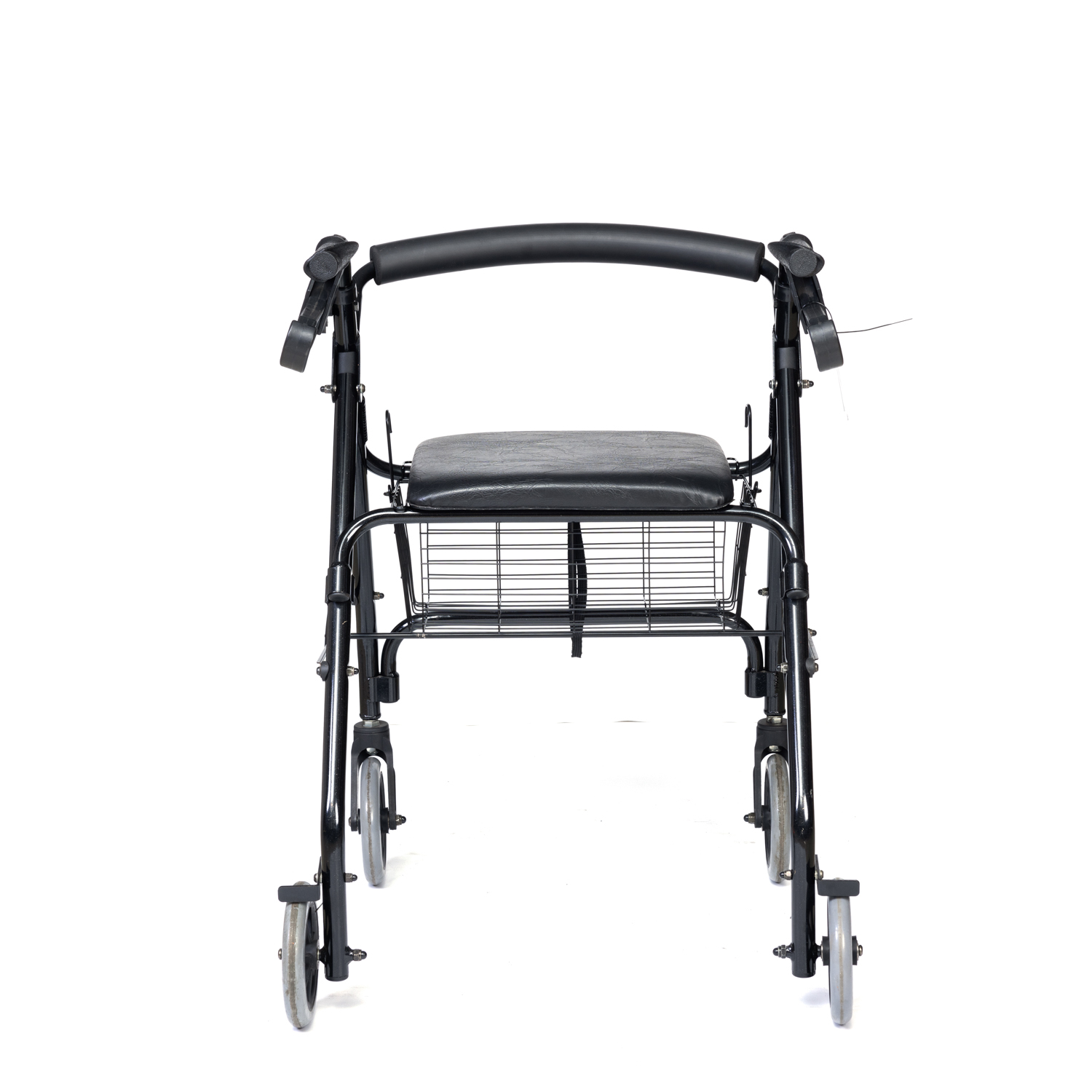
Upgrading to a heavy-duty mobility aid is a critical safety and financial decision. It is often prompted by the structural failure or instability of a standard walker. Standard models typically cap at 250 to 300 lbs. They also feature narrow seating. Heavy-duty alternatives offer reinforced frames. They provide wider dimensions and higher weight capacities. These upgrades prevent dangerous falls.
Evaluating whether the higher price point translates to tangible safety and longevity requires careful analysis. You must look past marketing claims. We need to examine frame materials, dimensional constraints, and daily use realities. We will explore how different specifications affect user stability. You will learn exactly what hardware matters most. This guide will help you make an informed decision for long-term mobility success.
Key Takeaways
Heavy-duty models are essential—not optional—for users exceeding 300 lbs or requiring a seat width greater than 18 inches.
A reinforced Aluminum Rollator provides the optimal balance of high weight capacity (often up to 400–500 lbs) and manageable transport weight compared to traditional steel frames.
The primary trade-off for increased stability is decreased maneuverability; wider frames often require careful measurement of home doorways and vehicle trunk space.
Purchasing decisions should prioritize wheel size (8-inch minimum for outdoor stability), reinforced cross-bracing, and user-serviceable braking systems.
Core Problem Framing: When Standard Rollators Fail
A standard walker works well for average loads. It fails under continuous high-weight stress. Frame tubes flex during daily use. This flexing weakens the joints over time. It causes metal fatigue. Users quickly notice instability.
This structural degradation creates a serious safety gap. Standard rollators degrade prematurely. They develop wheel misalignment. The wheels drag instead of rolling smoothly. Brake failure often follows. A brake mechanism depends on precise frame alignment. When the frame twists, the brake cables stretch. They lose their stopping power. This puts you at immediate risk.
Success Criteria for Heavy-Duty Upgrades
A heavy-duty upgrade must meet strict mechanical criteria. Marketing labels are not enough. We evaluate success based on three critical performance metrics. These metrics ensure user safety and caregiver convenience.
Zero frame torque: The unit must remain completely rigid. It should not twist during weight-bearing turns. Torque causes imbalance.
Seating security: You must be able to sit and stand safely. The frame cannot tip backward. The seat material must not sag under pressure.
Maneuverability: The device must support high weight capacities safely. It cannot become too heavy for practical use. A caregiver must lift it into a vehicle easily.
Understanding how standard models fail helps us define what a quality replacement looks like. We summarized common failure points below.
Standard vs. Heavy-Duty Failure Points
Component
Standard Rollator Weakness
Heavy-Duty Requirement
Frame Tubing
Thin walls buckle under 300+ lbs.
Reinforced extrusion resists bending.
Cross-Bracing
Single thin bar allows side-to-side sway.
Dual thick cross-bars prevent torque.
Caster Forks
Plastic forks crack upon sudden impacts.
Solid metal forks survive hard shocks.
The Material Debate: Can an Aluminum Rollator Handle Heavy-Duty Use?
The medical equipment industry has debated frame materials for decades. Historically, bariatric walkers relied on heavy tubular steel. Steel provides immense raw strength. It handles massive downward force. However, it creates a very heavy mobility device. Modern engineering has shifted this standard completely.
Steel vs. Aluminum
Older steel models often weighed over 30 pounds. Caregivers struggled to lift them. Users found them difficult to push up ramps. Today, advanced metallurgy offers better solutions. We no longer rely exclusively on heavy steel.
The Aluminum Advantage
Modern manufacturing utilizes extruded tubing. A reinforced Aluminum Rollator offers aerospace-grade tensile strength. It supports heavy users safely. It achieves this while shedding 5 to 10 lbs of overall product weight. This weight reduction changes the entire daily experience. It improves user independence.
Corrosion Resistance
Aluminum frames inherently resist rust. Steel frames rust quickly when scratched. Rust weakens the joints. It ruins folding mechanisms. Aluminum prevents this degradation. This is a critical factor for users exposed to rain. It also matters in coastal environments. Salt air destroys unprotected steel. Corrosion resistance significantly extends the equipment's lifespan.
Verdict
For heavy-duty requirements, material selection dictates usability. A specifically engineered aluminum rollator prevents the device from becoming a secondary mobility obstacle. It does not become too heavy to push. It does not become too heavy to transport. You get high capacity without the heavy burden.
Material Performance Chart: Steel vs. Aluminum
Feature
Tubular Steel
Reinforced Aluminum
Average Weight
28 - 35 lbs
18 - 25 lbs
Rust Resistance
Low (requires thick paint)
High (naturally resistant)
Caregiver Lifting
Difficult / High strain
Manageable / Moderate strain
Evaluation Dimensions: Features That Drive Mobility Outcomes
We must evaluate specific hardware features carefully. High weight capacities require specific structural choices. You should never guess on these specifications. They directly drive your daily mobility outcomes.
Weight Capacity and Structural Integrity
Look for verified weight limits. Heavy-duty models typically hold 400 lbs to 500 lbs. Check the frame design under the seat. It must have dual cross-bar framing. Single bars bend under repetitive stress. Dual bars distribute the load evenly across the frame.
Seat Width and Depth
Standard seats measure roughly 18 inches across. They pinch heavier users. They restrict blood flow. Heavy-duty models offer 19 to 22-inch seat widths. Proper seat depth provides thigh support.
You must follow a strict evaluation rule. The seat must be at least 2 inches wider than the user's seated hip measurement. This extra space prevents pressure sores. It accommodates winter clothing. It ensures ease of egress when standing up. Tight seats trap users during emergencies.
Wheel Base and Caster Size
Wheel size dictates terrain capability. Small wheels catch in pavement cracks. They stop abruptly. This causes the walker to tip forward. You need appropriate wheel specifications for outdoor safety.
Minimum 8-inch wheels are required.
Use polyurethane or solid rubber wheels. They distribute increased weight effectively over uneven outdoor terrain.
Avoid PVC wheels entirely. They lack shock absorption. They crack under high load capacities.
Braking Mechanisms
Halting a higher mass safely requires strong brakes. Loop-lock brakes are non-negotiable. They must use reinforced steel cables. The brake pads must grip the wheels firmly. You should test the locking mechanism. It must hold the device completely still while seating.
Implementation Realities and Hidden Risks
Buying a heavy-duty model introduces new challenges. A larger frame behaves differently in a home environment. You must plan for these implementation realities. Hidden risks arise when users ignore physical dimensions.
The Doorway Dilemma
Heavy-duty rollators have wider overall footprints. They often measure 26 to 29 inches wide. Standard interior residential doors are typically 28 to 30 inches. Bathroom doors are often even narrower. This creates tight clearances. It can create hard blocks. You might scrape door frames. In worst-case scenarios, the device will not fit into the bathroom at all.
Transport Weight
Weight reduction strategies have limits. An Aluminum Rollator mitigates excess weight effectively. However, a heavy-duty model will still weigh between 18 and 25 lbs. It requires solid metal joints to remain safe. Buyers must verify physical capabilities. The user or caregiver must have the physical strength to lift it into a car. Trunk lips require lifting the unit quite high.
Turning Radius Constraints
A wider, longer wheelbase inherently increases the turning radius. Standard walkers pivot on a dime. Heavy-duty walkers require wider arcs. Tight maneuvers become more difficult. Small kitchens become frustrating. Narrow hallways require multiple forward-and-backward motions to turn around. You must anticipate these spatial restrictions before purchasing.
Shortlisting Logic: How to Make the Final Decision
Selecting the right model requires a systematic approach. Do not buy based on appearance alone. Follow these specific steps to match the hardware to your exact needs.
Audit User Measurements. Measure the user accurately. Record their exact weight. Measure their seated hip width. Determine handle-height requirements. Measure from the floor to the crease of the wrist when they stand straight. Correct handle height prevents back pain.
Audit Environment Constraints. Walk through the primary residence. Measure the narrowest interior door. Measure hallway corners. Measure the bathroom entrance. Compare these numbers to the product's overall width spec.
Match Material to Lifestyle. Consider daily habits. Will the device be transported frequently? If so, filter exclusively for heavy-duty Aluminum Rollator models. They save caregivers from back strain. Will it remain strictly indoors on one level? A heavier steel model may be a viable cost-saving alternative.
Verify Warranty and Parts. Mobility aids require maintenance. Brake cables snap. Wheels wear down. Select brands that offer transparent warranties on the frame. Ensure they sell replacement wheels directly. Ensure they sell brake cables directly. Avoid disposable brands.
Following this shortlisting logic prevents expensive mistakes. It ensures you buy a device that fits both your body and your home.
Conclusion
Heavy-duty rollators are absolutely worth the investment if user specifications demand them. Relying on an undersized mobility aid is a false economy. It drastically and exponentially increases fall risks. A collapsed frame causes severe injuries. Proper equipment restores confidence and independence.
You must prioritize models that utilize heavy-duty aluminum construction. They effectively balance safety with portability. Your actionable next step is simple. Begin the buying process by taking exact measurements of the user. Measure your primary living environment next. Do this before reviewing specific product spec sheets. Accurate data leads to the safest choice.
FAQ
Q: What is the difference between a standard and heavy-duty rollator?
A: Heavy-duty (bariatric) models feature reinforced frames, wider seats (19"+), larger wheels, and support weights from 300 to 500+ lbs. Standard models typically cap at 300 lbs and 18-inch seats. Heavy-duty units also utilize thicker cross-bracing to prevent frame twisting during use.
Q: Are aluminum rollators strong enough for bariatric users?
A: Yes. Provided the frame is specifically engineered for bariatric use with dual cross-bracing, an aluminum rollator safely supports high weight limits. It offers excellent tensile strength while remaining light enough for a caregiver to lift into a vehicle.
Q: Will a heavy-duty rollator fit through standard doorways?
A: It depends. Heavy-duty models range from 26 to 29 inches in total width. Standard interior doors are usually 28 to 30 inches. You must measure your narrowest doorways (especially bathrooms, which are often narrower) before purchasing to ensure clearance.
Q: Does Medicare cover heavy-duty rollator walkers?
A: Medicare Part B may cover a portion of the cost as Durable Medical Equipment (DME). It must be prescribed by a doctor. The doctor must document that a standard walker cannot safely support the patient's specific weight or physical condition.
Ralon Medical And Science Co., Ltd. with sets of overseas equipment, we have a Plastic Plant, a Steel Tubes Plant, a Hardware Plant. Also, a Product Testing Center. Special specification can be produced according to customers' designs or samples.